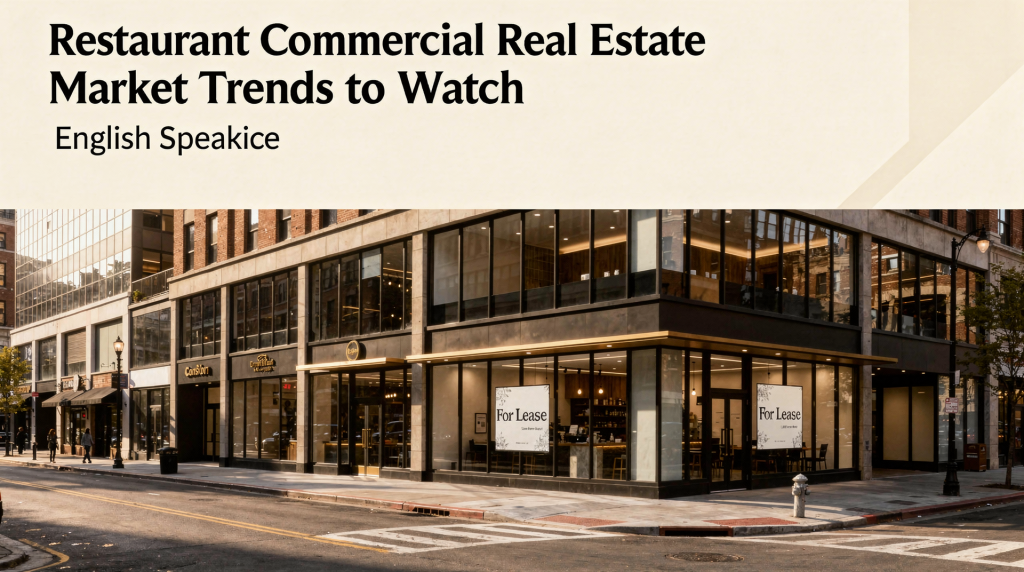
Restaurant real estate is being shaped by a simple truth: the best-performing locations are the ones that match how people actually eat now. That means more demand for smaller, flexible spaces, stronger interest in high-traffic corridors and suburban growth nodes, and a sharper focus on layouts that support takeout, delivery, and drive-thru service.
For operators, the opportunity is real—but so is the risk. The market is rewarding concepts that can move fast, control occupancy costs, and fit into spaces that already work operationally. The operators who treat the lease and the space as part of their operating system, rather than just an address, are the ones landing terms that actually support the P&L.
Why restaurant real estate is changing
The restaurant sector remains one of the key demand drivers in retail leasing, especially for grocery-anchored centers, mixed-use projects, and roadside sites with strong visibility. At the same time, higher borrowing costs, tighter lending, and rising operating expenses are pushing investors and landlords to favor durable, flexible deals over speculative ones.
What used to matter most—simply getting a restaurant into a good address—now matters less than whether the site supports the business model. A great dining room in the wrong location can still fail if parking, access, kitchen flow, or lease terms are off. I’ve evaluated spaces where the front-of-house looked fantastic but the back-of-house had no place for a delivery handoff, and the menu couldn’t survive that friction.
That shift is healthy. It forces operators and landlords to talk about the same thing: unit-level economics, not just square footage.
The biggest restaurant commercial real estate market trends to watch
These six trends are driving most of the leasing conversations I’ve seen in food and beverage retail. They aren’t abstract signals—they show up in lease terms, site selection checklists, and buildout budgets.
1. Smaller footprints are winning
Demand is concentrated in spaces under 2,500 square feet, with that size range making up a large share of new restaurant deals. This reflects a broader shift toward efficient layouts, lower buildout costs, and formats that can generate revenue without needing a huge dining room.
Smaller footprints are especially attractive for:
- Fast-casual concepts
- QSR brands
- Coffee shops
- Neighborhood bakeries
- Ghost kitchen-adjacent pickup models
Why it matters:
- Lower rent exposure
- Smaller staffing needs
- Faster permitting and buildout in many cases
- Easier to scale across multiple markets
From an operating standpoint, a compact space forces you to decide what actually drives revenue. A tight bar or pickup counter can outperform a sprawling dining room if the concept is built for throughput.
2. Drive-thru and pickup-friendly sites are in demand
Drive-thru support has become a major site-selection filter, especially for QSR and takeout-heavy concepts. Landlords and developers are increasingly adding restaurant pad sites to shopping centers and mixed-use projects because these tenants help drive traffic and strengthen the property’s performance.
Look for sites with:
- Easy vehicle access
- Strong road visibility
- Sufficient stacking room
- Clear ingress and egress
- Space for pickup parking or mobile-order staging
This trend is not limited to traditional drive-thru brands. Even operators without a drive-thru are prioritizing curbside pickup, app orders, and efficient handoff zones. I’ve seen neighborhood coffee shops insist on a dedicated pickup window even when the dining room is just a few tables.
3. Flexible lease structures are becoming more common
Leasing terms are evolving as operators and landlords respond to cost pressure and sales volatility. Percentage rent, performance-based terms, and other flexible structures are showing up more often, especially in competitive or high-cost markets.
Common changes to watch:
- More negotiated rent concessions
- Shorter or more flexible initial terms in some deals
- Higher scrutiny of tenant improvement packages
- Greater emphasis on rent escalations
- Broader use of percentage rent in stronger sales corridors
For operators, this means the lease is no longer just a legal document. It is part of the business model. In practice, a floor of percentage rent tied to actual sales can protect a new location during a slow ramp, while a landlord may accept a lower base in exchange for upside when the concept proves out.
4. Suburban growth markets are attracting more restaurant activity
Expansion is continuing in high-traffic retail corridors, suburban trade areas, and mixed-use developments. These locations often offer easier parking, stronger family traffic, and better access than dense urban cores.
Why suburban markets are attractive:
- More car-dependent customers
- Larger site options
- Better support for drive-thru formats
- Often faster unit-level sales ramp for takeout-oriented concepts
This does not mean urban dining is weak. It means the growth story is increasingly tied to convenience and repeat visits. A fast-casual brand that relies on lunch frequency may find a suburban grocery-anchored pad with easy in-and-out outperforms a dense downtown storefront with brilliant foot traffic but impossible parking.
5. Second-generation restaurant space is becoming more valuable
In a constrained market, well-located second-generation restaurant spaces can be a major advantage. They often reduce buildout cost and shorten time to opening, which matters when permitting and construction timelines are long.
These spaces are especially useful if they already include:
- Grease traps
- Hood systems
- Floor drains
- Ventilation
- Existing kitchen infrastructure
- ADA-compliant restrooms
That said, second-gen space is not always plug-and-play. The previous tenant’s layout may not fit your service model, and mechanical systems may need expensive upgrades. I’ve walked into spaces where the hood was usable but the grease trap was undersized for a high-volume fryer program, and that single issue added weeks to the schedule.
6. Tenant quality matters more to landlords and lenders
Higher rates and operating uncertainty have made investors more selective, especially in restaurant net lease deals. Durable cash flow, resilient operators, and flexible buildings are getting more attention than expansion stories alone.
This affects leasing in practical ways:
- Strong concepts may negotiate better terms
- Weak credit or unproven operators may face tighter underwriting
- Landlords may favor brands with multiple successful locations
- Lenders may require stronger guarantees or reserves
If you are an operator, your financials, concept consistency, and operating history now carry more weight than ever. A landlord may be willing to bend on rent for a proven multi-unit group, while an unproven concept with a great idea but no track record will face stricter guarantees and higher reserves.
What these trends mean for restaurant operators
The current market rewards speed, discipline, and operational fit. If a site looks great on paper but creates expensive labor, weak flow, or poor delivery performance, it may be the wrong site.
Use this quick decision framework:
| Trend | What it means for operators | What to do |
|---|---|---|
| Smaller spaces | Lower occupancy burden, but less room for mistakes | Design every square foot around revenue |
| Drive-thru demand | Sites with vehicle access have an edge | Prioritize stacking, circulation, and visibility |
| Flexible leasing | Terms are more negotiable than they used to be | Push for TI, rent relief, or performance-based structures |
| Suburban growth | More demand outside dense downtown cores | Test neighborhood traffic patterns and household density |
| Second-gen availability | Faster openings and lower capex, but hidden risks | Inspect HVAC, hood, plumbing, and code compliance carefully |
How to evaluate a restaurant site in today’s market
Before you sign anything, work through these five steps. They are the same ones I use when helping operators filter a shortlist of potential locations.
Step 1: Check whether the location matches the concept
A bakery, coffee shop, neighborhood cafe, and fast-casual restaurant do not need the same type of space. Ask:
- Does the menu require heavy kitchen production?
- Is the business breakfast, lunch, dinner, or all-day?
- Are customers expected to linger or turn over quickly?
- Will most orders be dine-in, pickup, or delivery?
This is not about preference; it is about whether the physical space can produce the menu efficiently and hit the service speed the concept promises.
Step 2: Measure traffic the right way
Not all foot traffic is equal. A busy street with the wrong customer mix may underperform a quieter center with the right daily habits.
Check:
- Vehicle counts during your operating hours
- Daypart patterns, not just raw daily traffic
- Parking convenience
- Nearby co-tenants
- Visibility from the main approach
Step 3: Study the lease economics
Rent is only part of the picture. Review:
- Base rent
- CAM charges
- Tax pass-throughs
- Insurance pass-throughs
- Rent escalations
- Personal guarantees
- Exclusivity clauses
- Use restrictions
- Termination rights
In a restaurant deal, occupancy cost is usually the second or third largest line item after labor and food cost. A base rent that looks low can become brutal when CAM, taxes, and insurance pass-throughs are stacked on top.
Step 4: Inspect the physical plant
Restaurants live or die on infrastructure. Before you commit, verify:
- Grease trap capacity
- Hood and suppression systems
- Gas service
- Electrical load
- Water and sewer access
- HVAC condition
- Delivery access
- Trash handling
If any of these systems is missing or undersized, the buildout budget and timeline need to change before you sign the LOI.
Step 5: Build a realistic opening timeline
Permitting and buildout often take longer than expected, especially where use permits or redesigns are required. If your lease starts before you can open, the carrying cost can become a serious problem.
Build the opening timeline backward from the first revenue day. Then add buffer for the city, the landlord, and the contractor. Most delays happen at the intersection of those three.
Common mistakes operators still make
- Choosing a “pretty” space that does not support the workflow
- Underestimating buildout costs for second-generation space
- Ignoring parking and pickup circulation
- Signing a lease before confirming zoning and use approval
- Overcommitting to a long term without enough sales history
- Focusing on headline rent while ignoring pass-through costs
- Assuming delivery sales can compensate for a weak location
Restaurant real estate signals worth watching in 2026
- Growth in QSR and fast-casual leasing activity
- Continued demand for grocery-anchored and mixed-use sites
- More competition for small-format, high-visibility spaces
- Greater landlord interest in stable, proven operators
- Increased use of flexible rent structures
- Continued premium pricing for drive-thru capable sites in strong corridors
Practical checklist before signing a lease
- Confirm the site matches your service model
- Verify zoning and permitted use
- Review buildout costs with a contractor
- Check utility capacity and mechanical systems
- Model total occupancy cost, not just base rent
- Negotiate TI, free rent, and escalation terms
- Understand opening timeline risk
- Compare the space against at least two alternatives
FAQ
What type of restaurant space is most in demand right now?
Smaller spaces under 2,500 square feet, especially those that support fast-casual, QSR, coffee, and takeout-heavy concepts.
Are drive-thru sites still worth paying a premium for?
Yes, in the right market. Drive-thru-capable sites can support stronger traffic and are in high demand for convenience-oriented concepts.
Is second-generation restaurant space a good deal?
Often yes, because it can reduce buildout cost and speed up opening. But the mechanical systems, layout, and code compliance still need a full review.
What should operators negotiate most aggressively?
Tenant improvement allowances, rent escalations, lease term flexibility, exclusivity, and any clauses tied to opening delays or construction issues.
Which markets are strongest for restaurant expansion?
High-growth suburban areas, strong retail corridors, and mixed-use districts continue to attract the most restaurant activity.
Conclusion
The restaurant commercial real estate market is increasingly favoring efficient spaces, convenience-driven formats, and operators who understand how real estate affects unit economics. The best opportunities are not just the cheapest or the busiest—they are the spaces where layout, access, lease terms, and customer behavior all line up.
For food and beverage operators, that is the real trend to watch: not just where restaurants are opening, but which spaces actually help them win.